
Handwork
The overarching purpose of this Lower School Handwork guideline is to outline the handwork curriculum indications for Classes 1-7, ensuring that these are embedded in time and place and can be added/linked to the SEANZ curriculum document. As with the other curriculum areas, individual schools will annotate where they deviate and why from these indications.
Handwork lessons are essential to a Waldorf student's journey through the Lower School classes. Finger knitting and simple sewing can be taught in the kindergarten. In the Lower School classes, children learn knitting, crocheting, sewing, and embroidery; many become very competent. In handwork lessons, tamariki learn to craft items with beauty and purpose from natural materials by hand. In High School classes, students learn more specific skills, like weaving, bookbinding, and machine sewing. As students progress through the classes, they learn to use their hands and hand-eye coordination with increasing skill, bringing growing consciousness to their mahi.
Through handwork lessons, Lower School students learn how to create everyday objects made from soft materials. The tamariki are encouraged to handle spun and woven materials with great care and sensitivity and to find heartfelt joy in the bright colours and forms. Through handwork projects, the children are supported to unite colour, form and skills with loving understanding, to bring them together by creating physical items that are meaningful, aesthetically pleasing and emotionally significant for the individual child. The child's efforts to unite their thinking, feeling and will can be seen in each completed object.
Handwork lessons offer unique opportunities for students to experience therapeutic aspects of the Waldorf curriculum when the subject is given adequate space, time and resourcing. Handwork teaching is best done by a specialist teacher, where enough time is provided so that the teacher can build a relationship with the children and the children can build a relationship with their work. Through the subject of handwork, students can be led to a deeper, holistic understanding of themselves, how they interact with others and their place in the world around them.
Through small and large handwork projects, student in Classes 1-7 engage in their head (through planning and designing before beginning), their hearts (an emotional connection to their project), and hands (will-doing, practical skills and applications) to complete items that are both aesthetically pleasing and have practical uses. Through the slow-paced projects, ākonga learn about delayed gratification and persistence. They also learn about order: preparation, action and completion. This process can bestow a sense of order on the tamariki, the importance of preparation, physical action and refinement of skills, and finally, the response, the judgment, and the ability to discern how well they engaged with the process of preparation and action are revealed in their completed work. All projects should be completed and finished with attention to detail. The handwork teacher aims to ensure that all created items have a purpose, are designed to be useful, and are decorated to reflect that use in their decoration and design.
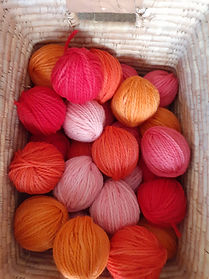
An experience of colour plays a vital role in this subject. Each student should be able to choose their own colours and develop personal relationships with colour and how this sits with their own experience of themselves in the world. Steiner insisted that children should be taught to distinguish between the "beautiful" and the "less beautiful," especially regarding the development of their sense of colour.

Class
1
Statement of Intent
The task in Class 1 is to make the transition from play to focused periods of attention playfully and artistically. The children initially learn by imitating the teacher and exploring the medium of wool with various pre-knitting experiences. Knitting awakens and promotes the children's mental powers and fine motor dexterity as they actively transform a one-dimensional element, the thread, into a two-dimensional fabric with a three-dimensional function. The children should begin developing a sense of practical design, suitable colours, and simple shapes. The schooling of the lower senses (touch, life, movement, balance) through the physical movement of knitting enables both hands to work harmoniously. As children manipulate wool and needles, they refine their hand-eye coordination and dexterity. The repeated motions required in knitting contribute to strengthening small muscles in the hands and fingers, setting a solid foundation for various future activities.
"When we teach a child to knit or to make something (...) the things he makes must have purpose and meaning--we are then working upon the spirit of the child."--Rudolf Steiner. Through learning to prepare, do, and complete purposeful hand-crafted items, ākonga are given the opportunity to develop fine motor skills and a personal and living relationship to form and colour. Students can experience a deep sense that they can make beautiful and unique items through ongoing effort, creativity, concentration and purposeful action. Verses, stories, and rhymes are essential to enlivening and making these skills and processes memorable and relevant for the tamariki.
Learning to knit helps children develop the skills to cross the mid-line, an essential developmental skill connecting the right and left brains. It is required for overall coordination in both physical and learning tasks, such as putting on socks, tying shoelaces, drawing, reading and writing. Knitting enhances the awareness and the dexterity of both hands. It stimulates cellular development in the brain.
"This strengthens the physical foundations for thinking. ‘Praxis, or the ability to program a motor act, shows a close relation to reading skills…" (Jean A. Ayers as cited in E. Schwartz, 1993, pp 1).
Subject overview:
The body geography and body awareness begun in kindergarten can be continued in Class 1 handwork lessons, supporting children to know left from right and to awaken their individual fingers in preparation for craft through verse and rhyme.
In Class 1, the children are introduced to the wool cycle, where wool comes from, and how spun wool is made from fleece. Finger knitting is an essential foundational skill that teaches children how to wind and care for a ball of wool, make a loop, and use the fingers of both hands to work together to create a chain.
Children can be supported to make their own needles in preparation for learning to knit. Each child is taught to knit through story and rhyme, usually in small groups at a time. First, knitting, then casting on and casting off. Simple sewing skills can be taught alongside knitting so children can complete their projects. Some teachers may begin a handwork book where students can collect and follow simple project patterns.
Adequate time, space and resourcing are needed at this class level, where the foundational skills and connections of handwork are being established. The tamariki need time and a relaxed setting to foster a love for their work's aesthetic qualities and build a strong, trusting relationship with handwork and their handwork teacher.
Possible lesson content:
-Finger and body geography games and rhymes
-Where wool comes from
-Slip knots and finger knitting
-Basic knitting skills
-How to make knitting needles
-How to care for our work, materials and equipment.
-Te reo for simple instructions, numbers to 20, body geography, colour, shape and everyday items.


Waldorf Achievement Objectives
Soul and Emotional Development: The children will be led to an experience of
-
a sense of self and personal body geography.
-
a sense for the aesthetics of form, colour and shape
-
an appreciation for the design process and project completion
-
that Te Reo can be a natural part of any lesson.
Within the expected range of Class 1, the children will be able to:
-
Make slip knots and finger-knit
-
Thread a large needle, basic stitching (tuck away ends, anchor stitch, running stitch, over stitch etc),
-
Sew up their own pieces of work.
-
Knit plain (and purl as an extension for students as needed).
-
Cast on and cast off
-
Count stitches and rows
-
Change the colour and join a new ball of wool.
-
Plan, work on and complete projects
Class
2
Statement of Intent
In Class 2 the children develop and build upon the skills they have begun in Class 1. Once the children have mastered plain knitting, stocking-stitch can be introduced. The students’ capacity for thinking is further developed and greater focus is required as the knitting projects become more complex, requiring planning and an understanding of pattern design. Through learning to prepare, do, and complete purposeful hand-crafted items, ākonga are given further opportunities to develop fine motor skills and a personal and living relationship to form and colour. Students can experience a deep sense that they can make beautiful and unique items through ongoing effort, creativity, concentration and purposeful action. Verses, stories, and rhymes are essential to enlivening and making these skills and processes memorable and relevant for the tamariki.
Subject overview:
The body geography and body awareness of Class 1 can be continued in Class 2, supporting children to know left from right and to awaken their fingers in preparation for craft through verse and rhyme.
In Te Akomanga Tuarua, the children's knitting and sewing skills can be extended, and the students can be encouraged to work on more significant, more complex projects. Increasing and decreasing, changing colour, plain and purl, and learning to follow simple patterns will help the students improve their skills and independence. Children can be asked to make drawings of their creations, as plans or illustrations in their handwork books, to grow their relationship to their designs and the aesthetics of form and colour.
As the children become competent, confident knitters, the repetitive nature of knitting can have a calming effect, making it an excellent stress-relief activity for children. As they focus on their stitches, they may find a sense of tranquillity, helping them cope with anxiety or nervous energy. Knitting can become a mindful practice, promoting emotional well-being.
Possible lesson content:
-finger and body geography games and rhymes
-how to follow simple patterns.
-more complex knitting skills.
-how to care for our work, materials and equipment.
-Te reo for simple instructions, numbers to 100, body geography, colour, shape and everyday items.

Waldorf Achievement Objectives
Soul and Emotional Development:
The children will be led to an experience of
-
sense of self and personal body geography.
-
sense for the aesthetics of form, colour and shape
-
appreciation for the design process and project completion
-
understanding that Te Reo can be a natural part of any lesson.
Within the expected range of Class 2, the children will be able to:
-
Count stitches and rows
-
Cast on and off
-
Knit two stitches together
-
Read and follow patterns
-
Knit plain, purl and change between the two.
-
Cast on and cast off, including in the middle of a piece of work (eg: for animal legs)
-
Increase and decrease.
-
Thread a large needle, use basic stitching (tuck away ends, anchor stitch, running stitch, over stitch, etc) to sew up their own pieces of work.
-
How to recognise errors in their work and learn how to fix simple mistakes.
-
Plan, work on and complete projects


Class
3
Statement of Intent
In Class 3, the children are becoming more awake and aware of themselves and the world around them, and they can be given projects that ask them to use more of their thinking and planning skills. After two years of learning to knit, many children are ready for a new challenge. Fair Isle knitting and crochet can be introduced. Crochet further develops a child's sense of rhythm and requires different calculation and planning skills from knitting. The repetitive rhythm of crochet can soothe the inner turmoil of the 9-year-old child.
Through learning to prepare, do, and complete purposeful hand-crafted items, ākonga are given the opportunity to develop fine motor skills and a personal and living relationship to form and colour. Students can experience a deep sense that they can make beautiful and unique items through ongoing effort, creativity, concentration and purposeful action. Verses, stories, and rhymes are essential to enlivening and making these skills and processes memorable and relevant for the tamariki.
Subject overview:
Fair Isle knitting skills and planning Fair Isle projects can further extend the students' knitting skills by encouraging them to develop more complexity in their thinking and planning for knitting projects. There are also lots of opportunities in these projects for students to explore colour, how different colours sit next to each other, and their effect on pattern and design.
Once students have genuinely mastered knitting, ākonga can be introduced to crochet. This skill engages both hands differently to knitting and further supports the student’s development of fine motor skills. The crochet hook is a specialised tool, which is held in the dominant hand. The movement of the crochet hook requires a student to build the capacity for fluid movement and rhythm - skills needed in cursive writing. Once again, learning to crochet can provide students with a fresh experience of how a one-dimensional chain can become two-dimensional material and how this can be given three-dimensional form and function.
Possible lesson content:
-Basic Fair Isle knitting skills.
-Basic crochet skills chain, double crochet, half-treble, treble, increasing and decreasing and working in straight lines and in circles.
-Following a basic crochet pattern
-Te reo for simple instructions, body geography, colour, shape and everyday items.
-building on sewing and completing project skills.
Waldorf Achievement Objectives
Soul and Emotional Development: The children will be led to an experience of
-
sense of self and personal body geography.
-
sense for the aesthetics of form, colour and shape
-
appreciation for the design process and project completion
-
understanding that Te Reo can be a natural part of any lesson.
Within the expected range of Class 3, the children will be able to:
-
Knit plain and stocking stitch and changing between the two.
-
Count stitches and rows
-
Cast on and off
-
Pattern reading and following
-
Design and complete Fair Isle patterns.
-
Knitting rib
-
Create a consistent crochet chain.
-
Correctly hold a crochet hook
-
Chain, double, half-treble, treble, and net stitches.
-
Crochet: increase and decrease.
-
Crochet flat and in the round.
-
Basic sewing skills.
-
Plan, work on and complete projects
Class
4
Statement of Intent
In Class 4, students can be challenged with projects that help them sharpen their thoughts and actions. The teacher can introduce finer needles and embroidery thread for stitching that require the children to become more conscious of what their eyes and fingers are doing. The children develop their planning skills by planning embroidery designs and are encouraged to bring personal expression into form. The discipline required to design and use colour and symmetry to create items decorated with cross-stitch patterns enhances their confidence and inner firmness as they explore their own ideas and preferences.
In Class 4, the curriculum moves from the whole picture to a closer examination of the parts. In numeracy, they explore fractions; in literacy, they begin to explore the elements that create a piece of writing in more detail. These subjects that ask students to shift their perspective from the whole to the part and from the part to the whole strengthen the students’ cognitive process. Children turning ten often begin to see they are smaller parts of a larger whole. This can be metaphorically explored through cross stitch pattern design, where many small crosses combine to make a larger complete pattern. The completed project is a beautiful design, often a large cross, created from many little crossings. Therefore, ākonga must be asked to complete each cross as they stitch.
Through learning to prepare, do, and complete purposeful hand-crafted items, ākonga are given the opportunity to develop fine motor skills and a personal and living relationship with form and colour. Students can experience a deep sense that they can make beautiful and unique items through ongoing effort, creativity, concentration and purposeful action. Verses, stories, and rhymes are essential to enlivening and making these skills and processes memorable and relevant for the tamariki.
Subject overview:
In Class 4, once students have mastered crochet and knitting, ākonga can be introduced to more complex and refined needlework and design.
The ākonga are frequently taught how to cross-stitch. They learn to plan and complete a small embroidery project such as a pin cushion, needle book or pencil case. These projects require that the students now sew with a finer wool or cotton thread and require high levels of skill and attention to detail.
Naturally, the students will become more independent and decisive in their design and colour choices. It is the role of the teacher to continue to help the ākonga to explore the attributes of beauty and how to plan items whose design reflects their purpose and function.
Possible lesson content:
-how to design, plan and complete an embroidery project.
-The history, origin and purpose of embroidery is an option.

Waldorf Achievement Objectives
Soul and Emotional Development:
The children will be led to an experience of
-
sense of self and personal body geography.
-
sense for the aesthetics of form, colour and shape
-
appreciation for the design process and project completion
-
understanding that Te Reo can be a natural part of any lesson.
Within the expected range of Class 4, the children will be able to:
-
Learn cross-stitch and other embroidery techniques.
-
Thread and knot a fine a sewing needle
-
Use pins to secure fabric.
-
Plan an embroidery design
-
Use anchor stitch, running stitch and back stitch, and tuck away ends
-
Plan, work on and complete projects

Class
5
Statement of Intent
In Class 5, there is a new need for harmony and harmonious projects, and often the handwork teacher asks them to return to knitting projects, building on existing skills, this time with much more focus on design, pattern reading, and complex knitting skills, like knitting in the round. Socks, hats, gloves, and slippers are complex projects that can be an adequate challenge for this age group. The additional perseverance required to complete two identical items and to complete something that meets their ideas of design and comfort encourages the ākonga to engage their will forces further.
Through learning to prepare, do, and complete purposeful hand-crafted items, ākonga are given the opportunity to develop fine motor skills and a personal and living relationship to form and colour. Students can experience a deep sense that they can make beautiful and unique items through ongoing effort, creativity, concentration and purposeful action. Verses, stories, and rhymes are essential to enlivening and making these skills and processes memorable and relevant for the tamariki.
Subject overview:
In Class 5 the students can be asked to refine and further develop their knitting skills. Often, students are asked to knit items of clothing, socks, gloves and hats; for this, students need to be able to read and follow knitting patterns and become familiar with standard knitting pattern abbreviations.


Students can use Fair Isle techniques to decorate items and add an additional level of challenge.
Possible lesson content:
-how to plan and complete a knitted item of clothing.
-the history, origin and purpose of knitting.
-learning how to read a pattern and including standard knitting abbreviations.
-how to plan and complete fair isle patterns
Waldorf Achievement Objectives
Soul and Emotional Development:
The children will be led to an experience of
-
sense of self and personal body geography.
-
sense for the aesthetics of form, colour and shape
-
appreciation for the design process and project completion
-
understanding that Te Reo can be a natural part of any lesson.
-
developing an understanding of the history, purpose and origin of crafts.
Within the expected range of Class 5, the children will be able to:
-
Knit in the round on 5 needles
-
Following knitting patterns that include knitting abbreviations
-
Master all basic knitting skills, and some more complex ones like ribbing, picking up stitches, and turning a heel.
-
Students capable of adding colour, interest and complexity to their knitting, for example fair isle.
Class
6 & 7
Statement of Intent:
In Classes 6 and 7 the students further refine and develop their fine sewing skills to create a three-dimensional animal from two-dimensional cloth. The students are asked to use their fine motor skills and hand-eye coordination in a precise way. The students can build a real relationship to cause and effect - holes and misshapen creations are a natural consequence of not paying attention to detail in these projects.
Now, the students can be asked to construct things through handwork in a much more conscious and living way. Previously, in the lower classes, the kaiako guided the tamariki in approaching their mahi through their realm of feeling. Students of this age are becoming more discerning and developing their capacity for judgment, perspective, and observing proportions. Ākonga can be guided to appreciate the natural law and order to the form and shape of animals and humans. Handwork offers a social opportunity to support students to safely reflect and discuss how they perceive shape and form in the world around them and a constructive way to use their fledgling opinions and judgments as they explore the attributes, proportions and symmetry of human and animal form. These complex projects engage their budding intelligence in meaningful, practical problem-solving.
As they sew, the teacher can endeavour to provide a space that encourages the pupils' connection between themselves and the animal or human form they are carefully forming (ensouling). Unconsciously, for many ākonga, these projects become an exploration of personal identity and how they see themselves relating to each other and the world.
Through learning to prepare, do, and complete purposeful hand-crafted items, ākonga are given the opportunity to develop fine motor skills and a personal and living relationship to form and colour. Students can experience a deep sense that they can make beautiful and unique items through ongoing effort, creativity, concentration and purposeful action. Verses, stories, and rhymes are essential to enlivening and making these skills and processes memorable and relevant for the tamariki.
Subject overview:
In Class 6, once students have mastered sewing and embroidery, they traditionally Class 6 ākonga design, create and colour a four-legged animal.
In Class 7, once students have genuinely mastered sewing and embroidery, they are introduced to more complex and refined needlework. Traditionally, the Class 7 children design, make and dress a doll.
The doll and the animal are complex projects where the students can be asked to study form, shape, and proportions and draw, model, and construct paper patterns. The final embellishments in either project serve to make the human or animal form artistically complete. The children are supported in developing an appreciation for and a connection with the animal and the human form. For success, students must master fine stitching, design and pattern making, understand the function of fabrics, and pay attention to the aesthetics of form, colour and shape.
Possible lesson content:
-how to design and complete a stuffed animal project.
-an appreciation for the crafts of the Pacific.

Waldorf Achievement Objectives
Soul and Emotional Development: The children will be led to an experience of
-
sense of self and personal body geography.
-
sense for the aesthetics of form, colour and shape
-
appreciation for the design process and project completion
-
understanding that Te Reo can be a natural part of any lesson.
-
an beginning understanding of the history, purpose and origin of crafts.
Within the expected range of Class 6 & 7, the children will be able to:
-
How to design a three dimensional pattern.
-
Thread and knot a fine a sewing needle
-
Use pins to secure fabric.
-
Use anchor stitch, running stitch and back stitch
-
How to colour and complete their animal
-
Demonstrate ability to cut around the pattern neatly.
-
Choose appropriate fabric for their projects’.
-
Demonstrate good construction skills, e.g.. positioning the pattern on the fabric and pinning it down
-
Demonstrate good finishing and embellishment skills, e.g. stuffing the animal to the appropriate firmness
-
Follow safety guidelines, e.g. handling scissors
-
Plan and design your project in colour.
-
wet-felting slippers/waistcoat and embroidering these
-
Introducing the sewing machine and designing and making their own clothes and various other projects.
